
Should You Rekey or Replace Your Locks After Moving Into a New Home?
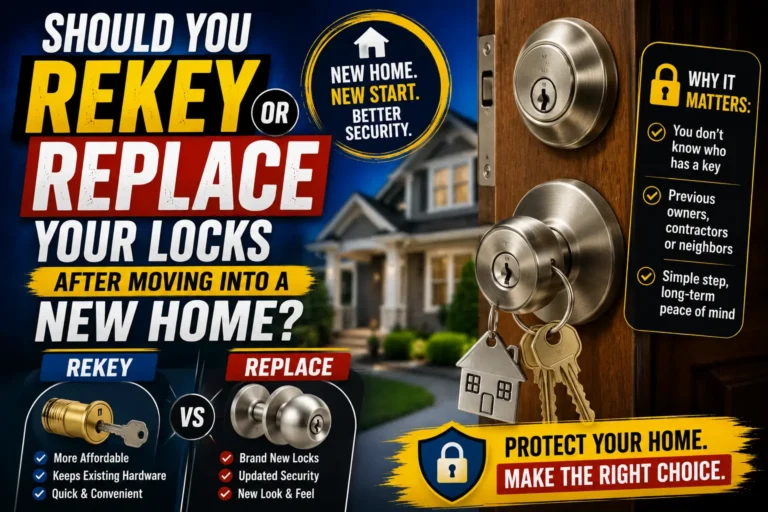
Moving into a new home or apartment is one of the most common reasons people call a locksmith, and the first real decision is whether to rekey the existing locks or replace them entirely. In most cases, rekeying is enough and costs far less than replacement. Here is exactly how to decide which one makes sense for your situation.
What Rekeying Actually Means
Rekeying changes the internal pins inside your existing lock so that old keys no longer work, while a new key is cut to match the updated pins. The lock hardware itself, the deadbolt, the cylinder housing, the exterior look of the lock, all stay exactly the same. Only the inner mechanism changes. This means a locksmith can rekey a perfectly good lock in a matter of minutes per door, without removing or replacing any visible hardware.
What Lock Replacement Actually Means
Replacement means removing the entire lock, deadbolt and all, and installing brand new hardware in its place. This is necessary when the existing lock is damaged, extremely outdated, or when you want to change the type of lock entirely, such as upgrading from a standard deadbolt to a keypad smart lock. Replacement takes longer and costs more, since you are paying for new hardware in addition to the labor.
Why Rekeying Is the Right Move for Most New Homeowners and Renters
If you just moved into a new home in Charlotte, whether it is an older house near Dilworth or a newer build near Ballantyne, you have no way of knowing exactly how many copies of the old keys exist, or who has them. A previous owner, a past tenant, a real estate agent, a contractor, or a neighbor who used to water plants during vacations could all technically still have a working key. Rekeying closes that gap completely and immediately, without the added cost of full replacement.
For renters moving into an apartment near Queens University of Charlotte or Central Piedmont Community College, rekeying is often the more realistic option anyway, since landlords frequently prefer to keep the existing lock hardware in place and simply change the key pattern between tenants.
When Replacement Makes More Sense Than Rekeying
Replacement is the better choice in a few specific situations. If the existing lock is old, worn, sticking, or shows visible damage, rekeying a failing lock just delays an eventual repair. If you want to upgrade to a smart lock with keypad or app based entry, that is a hardware change, not a key change, so replacement is required either way. And if a lock was damaged during a break in or attempted break in, replacement is the safer and more appropriate option, since a compromised lock body is a real security risk regardless of what is done to the internal pins.
Cost Comparison
Rekeying a standard lock typically costs forty to one hundred dollars per lock, depending on the lock brand and complexity. Many locksmiths offer a reduced per lock rate when rekeying several doors during the same visit, which makes sense for anyone moving into a new home with multiple exterior entry points. Full lock replacement costs more, generally starting around eighty dollars for basic hardware and running several hundred dollars for higher end smart locks, since you are paying for both the new hardware itself and the installation labor.
A Simple Way to Decide
Ask yourself two questions. First, is the current lock in good working condition, with no damage or major wear? Second, are you happy with the type of lock you already have, or do you want to switch to something different, like a smart lock? If the lock is in good shape and you are happy with the type, rekeying is almost always the right call. If either answer is no, replacement is worth the extra cost.
What to Ask a Locksmith Before Booking
Ask for a total price per lock before the technician arrives, and mention upfront how many doors need to be addressed, since multi door rekeying often comes with a lower per lock rate. If you are on the fence about replacement versus rekeying, a licensed locksmith should be able to look at your existing hardware and give you an honest recommendation, not just default to whichever option costs more.
Frequently Asked Questions About Rekeying and Lock Replacement
Is rekeying as secure as replacing the entire lock?
Yes, as long as the existing lock hardware is in good condition. Rekeying changes the internal pins completely, so old keys stop working entirely, which provides the same security benefit as replacement for a properly functioning lock.
How long does rekeying usually take?
Rekeying a single lock typically takes a matter of minutes once a locksmith arrives, and multiple locks can usually be completed in one visit.
Do I need to rekey every lock in my new home, or just the front door?
It is worth rekeying every exterior entry point, including side doors and any door leading from a garage into the home, since a previous key holder could technically have access to any of them.
Can I rekey a lock myself instead of hiring a locksmith?
Some rekeying kits are available for certain lock brands, but the process requires precision and the correct tools for your specific lock. A licensed locksmith can usually complete the job faster and with less risk of damaging the lock.
Should renters ask their landlord to rekey locks between tenants?
Yes. If you are moving into a rental, it is reasonable to ask whether the locks have been rekeyed since the last tenant, and to request it be done if not, especially for your own peace of mind.
Just moved into a new place in Charlotte and need locks rekeyed or replaced? Call Charlotte Locksmith Service at (207) 656-6060 for a same visit quote.
North Carolina locksmith license #3001. Verify our license anytime at the North Carolina Locksmith Licensing Board, nclocksmithboard.org.
Need a licensed locksmith in Charlotte? Call (207) 656-6060 for a same visit quote.
(207) 656-6060