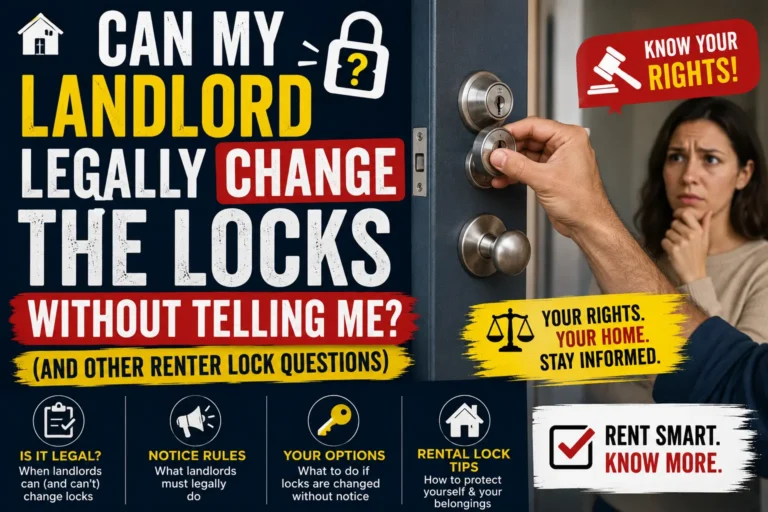
Can My Landlord Legally Change the Locks Without Telling Me? (And Other Renter Lock Questions)
Renters ask a specific set of lock related questions that homeowners rarely think about, since a lease adds legal and practical layers that ownership does not. Here are clear, practical answers to the most common questions Charlotte renters have about locks, rekeying, and lockouts. This article covers general information only and is not legal advice. For a specific dispute with a landlord, contact a local tenant rights organization or an attorney.
Can a Landlord Change the Locks Without Notifying You?
In general, a landlord cannot lock a tenant out of a rented unit without proper legal process, even if there is a dispute over rent or lease terms. This is often called a lockout law, and most states, including North Carolina, require landlords to go through formal eviction procedures rather than simply changing the locks to remove a tenant. If you believe your landlord changed the locks specifically to remove you from the unit without going through proper legal process, this is worth discussing with a tenant rights organization or an attorney, since self help evictions are generally not legal.
This is different from a landlord changing locks between tenants, or rekeying a unit before a new tenant moves in, which is standard and expected practice, not something that requires special notice to a departing tenant who has already moved out.
Can You Ask Your Landlord to Rekey the Locks When You Move In?
Yes, and it is a reasonable request. Many renters assume the locks were automatically changed between tenants, but this is not always the case. If you are moving into an apartment near Queens University of Charlotte, Central Piedmont Community College, or anywhere else in Charlotte, it is worth directly asking your landlord or property manager whether the locks have been rekeyed since the previous tenant moved out. If not, requesting it is a fair and common ask, especially since you have no way of knowing how many old keys might still exist.
Can You Rekey the Locks Yourself Without Asking Permission?
This depends entirely on your lease agreement. Many leases require landlord permission before changing or rekeying locks, since the landlord needs to maintain access for maintenance, inspections, or emergencies. Rekeying without permission, or without providing your landlord a copy of the new key, can be considered a lease violation in many cases, even if your intention was simply improving your own security. If you want to rekey for peace of mind, the safest approach is asking your landlord directly and providing them a copy of the new key once it is done.
What Happens If You Are Locked Out by Your Own Landlord?
If a landlord changes the locks improperly, without going through legal eviction proceedings, this is a serious tenant rights issue, not a standard lockout situation. Document everything, including dates, communications, and any notice you did or did not receive, and contact a local tenant rights organization or attorney promptly. This is a different situation entirely from a normal lockout, where you simply misplaced your own key.
What Happens If You Lock Yourself Out of a Rental?
A standard self lockout, where you simply do not have your key on you, is handled the same way as any home lockout. Some landlords keep a spare key on file and may be willing to let you in directly, especially during business hours. If your landlord is unavailable, calling a licensed locksmith is the appropriate next step, and you should have identification or proof of residency ready, since the locksmith will need to confirm you actually live at the address before opening anything.
Who Pays for a Lockout in a Rental Property?
This varies by lease and by landlord. Some leases specify a lockout fee if the landlord or property manager has to personally let a tenant in. If you call a locksmith directly rather than going through your landlord, you are typically responsible for that cost yourself, unless your lease states otherwise. It is worth reading your lease’s specific language on lockouts before you actually need it.
Can a Landlord Require You to Use a Specific Locksmith?
Some leases do specify an approved locksmith or property management maintenance line for lock issues, particularly for larger apartment complexes or HOA managed properties. If your lease includes this kind of clause, following it is generally required to avoid a dispute, even if you would prefer to call a different locksmith yourself.
Frequently Asked Questions About Renter Lock Rights
Is it legal for a landlord to lock me out to force me to leave?
Generally no. Landlords are typically required to go through formal legal eviction procedures rather than changing locks to remove a tenant. This kind of self help eviction is a serious tenant rights issue.
Should I ask my landlord to rekey the locks before I move in?
Yes. It is a reasonable and common request, especially since you have no way of knowing how many keys from previous tenants might still exist.
Can I change my own locks as a renter?
Only with your landlord’s permission in most cases, since many leases require landlord access to be maintained. If you do rekey with permission, provide your landlord a copy of the new key.
Who pays if I get locked out of my rental unit?
This depends on your lease. Some landlords keep a spare key and let tenants in at no charge, while others expect the tenant to cover the cost of a locksmith for a self caused lockout.
What should I do if I think my landlord changed the locks illegally?
Document all communication and dates, and contact a local tenant rights organization or an attorney as soon as possible, since this is a legal matter separate from a standard lockout situation.
Need a rekey with landlord approval, or locked out of your rental in Charlotte? Call Charlotte Locksmith Service at (207) 656-6060 for a same visit quote.
North Carolina locksmith license #3001. Verify our license anytime at the North Carolina Locksmith Licensing Board, nclocksmithboard.org.
Need a licensed locksmith in Charlotte? Call (207) 656-6060 for a same visit quote.
(207) 656-6060